Where
Leaders
Are Made
We help people become better speakers and better leaders. Visit one of the 200 clubs across New Zealand and begin your public speaking journey!
We can help you..
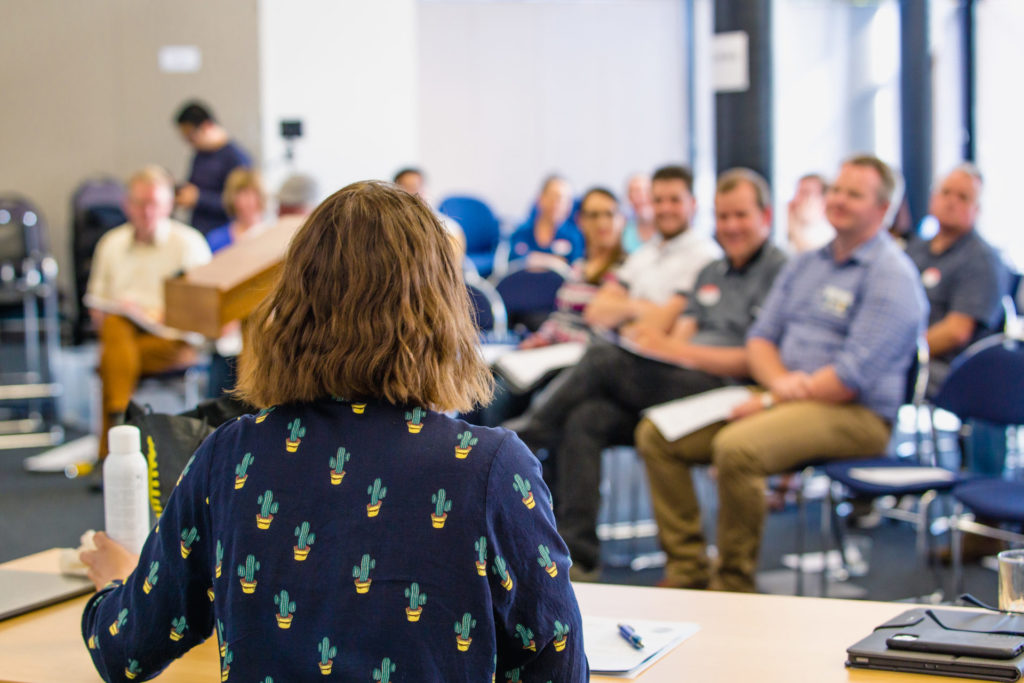
People come to Toastmasters for a variety of reasons. Some people come to practice for an upcoming speech, while others want to build leadership skills. Some may even just want to overcome shyness! Whatever your reason, Toastmasters is here to support your goals.
Build
Confidence
Learn Speaking
Techniques
Captivate Your
Audience
Make Lasting
Friendships
Become a
Leader
How it works
Club meetings are divided into three parts – prepared speeches, impromptu speeches and evaluations. Using this structure provides members with opportunities to work on different aspects of communication and leadership.
Prepared Speeches
Prepared speeches are scheduled in advance and are typically 5 – 7 minutes in length. These speeches are part of the Toastmasters Pathways Learning Programme and allow members to practice a more formal style of speaking.
Impromptu Speaking
We practice impromptu speaking through a method called table topics. This is where participants are given random questions and try to speak on them for 1 – 2 minutes. This may sound daunting, but it is actually lots of fun and is a valuable skill for everyday life.
Encouraging Evaluations
Everyone who speaks is evaluated. We do this in an encouraging way so that you can quickly understand your strengths and identify the next steps. This is one of the main benefits of coming to Toastmasters!
Information Brochure
Want to learn more about Toastmasters? Check out our Guest Information Brochure.
Types of Clubs
Toastmasters is all about accessibility. With nearly 200 clubs across New Zealand, there is bound to be one that is right for you!
Below are the types of clubs that Toastmasters offers. Choosing one depends entirely on your schedule, location and goals!
Community Clubs
Community clubs are the back-bone of Toastmasters. These are often the first types of clubs that new members will experience. Community clubs meet somewhere in local area (often community halls, churches or schools) and are a great option if you want to find a club close to home.
Corporate Clubs
Corporate clubs are a great way for businesses to foster in-house learning and development. They often meet on-site during the day. Some corporate clubs allow people from other workplaces to join, while others restrict membership to their own staff. If your workplace does not have a Toastmasters club, get a group of staff together and create one!
Advanced Clubs
Advanced clubs are designed for experienced members who want to elevate their speaking skills. Members typically need to belong to another Toastmasters club before they can join an advanced club. These clubs often meet monthly and provide members with opportunities to receive more critical feedback from highly-experienced evaluators.
Online Clubs
Online clubs are a great option if there is no community club in your area. Most online clubs meet using Zoom, so all you need is a webcam and an internet connection to attend. Some online clubs focus of specific skills or languages, others are run just like a regular Toastmasters meeting. This is also a great option if you want to practice speaking in front of a camera!
Speechcraft Clubs
Speechcraft clubs are a type of advanced club. They focus on running short courses in the community. This is a great option for someone who wants to practice professional speaking or for someone who enjoys teaching others how to speak. Like with advanced clubs, people typically need to be existing members of Toastmasters before they can join a Speechcraft club.
Start a Club
Have an idea for a Toastmasters club? We are more than happy to provide the support you need to get started. New clubs are typically assigned a Club Mentor, who are experienced members that can guide you on the journey.
Send us a message and we’ll get in touch as soon as possible to discuss your idea!
Get Involved!
Are you ready to start your journey with Toastmasters? Getting involved all starts with visiting a club. Use our FInd a Club tool to see which clubs are in your area and then simply go along to a meeting!
Every club is unique, so we recommend visiting a few before deciding which one to join. When you find one that suits you, make sure you commit for a reasonable period of time. Like with a gym membership, the more you attend Toastmasters, the more your speaking skills improve! But good things also take time, so be patient and give it an honest go!
- Visit
It is 100% free to visit as a guest and there is no pressure to speak on the first meeting. Simply come along and enjoy the speeches! Most clubs do not require booking beforehand. However, it may be worth sending a message to make sure the venue has not changed.
- Sign Up
If you like what you see and want to get involved, simply speak to one of the Club Officers during the meeting. They will be able to give you an application form and provide payment information.
- Speak
Now it is time to practice speaking! New members are usually assigned minor meeting roles to help them gradually build up their confidence. Once you are ready, the first speech will be your Ice Breaker. This is an opportunity to introduce yourself and become more comfortable speaking in front of an audience.
What Our
Members Say...
Toastmasters has helped thousands of people across New Zealand build their confidence. No doubt you already know someone who has been a member and have heard how it benefited them. In case you need any more convincing, just check out the testimonials from our past and present members!

South Island and Wellington Region
Email us:
d72@toastmasters.org.nz
Upper North Island
Email us:
d112@toastmasters.org.nz
Web Design by Brad Grootelaar. Suggest an edit here.
The information on this website is for the sole use of Toastmasters’ members, for Toastmasters business only. It is not to be used for solicitation and distribution of non-Toastmasters material or information.
About
Toastmasters has been helping people develop communication and leadership skills since 1924. We currently have over 280,000 members in 14700 clubs worldwide. Run almost entirely by volunteers, we offer one of the most affordable self-development programmes available!
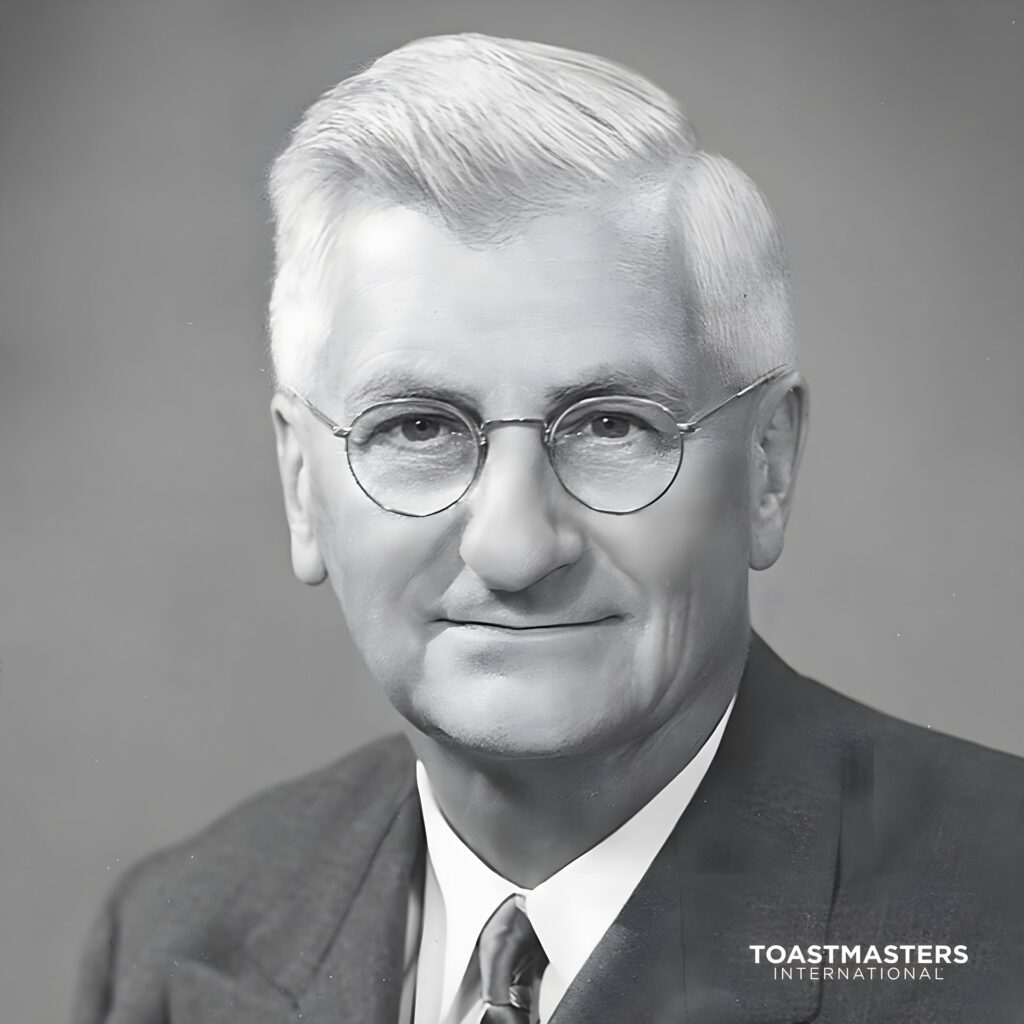
Ralph Smedley
Toastmasters was the vision of Ralph Smedley, who founded the first club in Santa Ana, California. While working for the Santa Ana YMCA, Smedley observed that many young men struggled with communication and felt that providing a place to practice speaking would help improve their confidence. The first meeting was held on 22 October 1924 and it was a huge success! Clubs were quickly founded in nearby towns and, by 1930, Toastmasters had become an International Organisation.
Toastmasters in
New Zealand
Toastmasters has a long history in New Zealand going back over 60 years. The success of the organisation is thanks to the efforts of many dedicated volunteers who have taken upon themselves to build new clubs.
The First Club
In 1960, the Readers Digest published an article called “Accustomed as I am”. In this, the writer described the rising popularity of Toastmasters and the techniques that were being used to help people become better communicators. The response to this article was overwhelmingly positive and enquiries soon poured into the Home Office. Because of the global reach of this magazine, people from all across the world were writing to Toastmasters International and asking how they can start their own club.
Once it reached New Zealand, one of the people who read this article was Tim Tomlinson from Dunedin. While attending an Institute of Management course, he took the opportunity to persuade his audience to start a Toastmasters cub. Much to his surprise, they took the idea seriously!
The first public meeting was held on 11 September 1961, with the Dunedin Toastmasters Club launching two days later. By July 1962, they had reached charter strength and became the first Toastmasters club in New Zealand.
The Second Club
While this was happening, a second club was forming in the north. Jolyon Firth of Auckland had heard about Toastmasters, and upon finding there was no club in his city, decided to start one. Using his business and community connections, he was able to bring together a group of people that would form Auckland Toastmasters. Jolyon became the charter President in April 1963.
Expansion
Before long, clubs began to form in Hamilton, New Plymouth, Christchurch, Rotorua and Wellington. By the end of 1965, there were 11 clubs in New Zealand. That same year, representatives from the clubs met in Wellington to form a Territorial Council.
The Flying Squad
The criteria to become a District was 35 clubs and 1000 members. By the early 1970’s the Territorial Council was edging closer and closer to this target.
To help us get over the line, Clive Pryme proposed setting up a “Flying Squad”. The plan was to charter an aircraft and have a team fly to various centres across New Zealand to conduct public meetings and charter more clubs.
This was no easy task and required months of planning. News releases where sent out before visiting a town and a ground team was organised in the event of misadventure. In September 1971, the Flying Squad departed and successfully chartered a number of new clubs. In addition, the publicity inspired many people to learn more about Toastmasters, with some even forming clubs in their own towns.
To this day, the Flying Squad is one of the greatest marketing achievements within our District.
Becoming a District
By 1972, there were 43 clubs within New Zealand, with a membership of 1,120. During the Auckland Convention of that year, a letter from Buck Engle, Executive Director of Toastmasters International, was read out informing attendees that they had achieved District status and would become District 72.
Women Members are Welcomed
Up until the early 1970’s, membership of Toastmasters was restricted to men. In 1973, Toastmasters International gave clubs the ability to amend their constitutions and decide for themselves if they would include female members.
Although this may seem like an obvious decision today, at the time, it was meet with much discussion and debate. Originally, Toastmistress clubs were set up alongside Toastmasters clubs. Although these two groups shared many similarities in the early years and even ran contests together, they were always independent organisations and became increasingly distant as time progressed. In 1985, Toastmistresses adopted the name International Training and Communication (ITC) and also opened their membership to both genders, thus ending their association with Toastmasters.
One District Becomes Two
Toastmasters clubs grew rapidly in New Zealand as people discovered the many benefits that membership offered. By 2017, there were 281 clubs within District 72. A decision was made to divide the District in half, with the Upper North Island becoming District 112. The Lower North Island and South Island would remain District 72, as it is tradition that the District with the first club maintains the original title.
This was put to the vote during the May 2018 Conference in Auckland and came into effect 1 July that year.
Global Pandemic
In March 2020, New Zealand went into a nationwide lockdown in response to the Covid-19 Pandemic. For Toastmasters clubs, which are built around social connection and in-person meetings, this was catastrophic. Some clubs temporarily paused their meetings, but many embraced new technology and began using video conferencing software to hold their meetings online. Although the learning curve was difficult, the result was that many members began feeling more comfortable using this type technology. Some look back on this experience as being positive for helping them present more effectively in front of a camera.
Another benefit was, for the first time, members from all over the world were able to attend each other’s meetings without traveling. As a result, there was an explosion of international visitors wanting to see how a club in New Zealand operated. Likewise, many members from New Zealand took the opportunity to visit clubs in other countries and gain new perspectives.
However, the pandemic was also difficult for many clubs. The resulting economic uncertainty meant that some members left the organisation and fewer new members joined. Many smaller clubs merged together, while others disbanded completely. In the following years, the number of clubs in New Zealand would reduce by over a third.
Two Districts Become One
In 2025, Toastmasters International began a process to review the boundaries of each District. With both District 72 and 112 losing a significant number of clubs following the pandemic, a decision was made to merged these entities together into a reunited District 72.
This change comes into effect from 1 July 2026.
Past District Directors
The District is led by a District Director, who is elected for a one year term. Without the hard work of these key people, the Toastmasters in New Zealand would not be the success that it is today.
District 72
1972 Terry Boon
1972 – 1973 Ray Morse
1973 – 1974 Sel Palmer
1974 – 1975 Clive Pryme
1975 – 1976 Peter Cooper
1976 – 1977 Derek Waite
1977 – 1978 Roger Pitchforth
1978 – 1979 John Fauvel
1979 – 1980 Dan Coomey
1980 – 1981 Alf Baker
1981 – 1982 Terry Bellamy
1982 – 1983 Les Hewett
1983 – 1984 Judith Bartlett
1984 – 1985 Martin Miller
1985 – 1986 David Gore
1986 – 1987 Mary Walker
1987 – 1988 Mark von Dadelszen
1988 – 1989 Chris Matthews
1989 – 1990 Len Jury
1990 – 1991 Russ Woods
1991 – 1992 Gaelle Deighton
1992 – 1993 Ian Mitchell
1993 – 1994 Laurel Francis
1994 – 1995 Carl Horn
1995 – 1996 Glen Murphy
1996 – 1997 Leo Baxendale
1997 – 1998 Richard Logan
1998 – 1999 Jenny Latta
1999 – 2000 Joan Hook
2000 – 2001 Robyn Murphy
2001 – 2002 Joy Ackrill
2002 – 2003 Warwick Lowndes
2003 – 2004 Ray Wolken
2004 – 2005 Colin Perfect
2005 – 2006 Kevin Warwood
2006 – 2007 John Reimers
2007 – 2008 Geoff Trotter
2008 – 2009 Chrissy Meyer
2009 – 2010 Alun Chisholm
2010 – 2011 Denis McCord
2011 – 2012 Steve Bullock
2012 – 2013 Murray Coutts
2013 – 2014 Ellie Young
2014 – 2015 Kingsley Moody
2015 – 2016 Carol Mitchell
2016 – 2017 David Templeman
2017 – 2018 Sarah Bate
2018 – 2019 Celina Templeman
2019 – 2020 Diane Isherwood
2020 – 2021 Rob Woolley
2021 – 2022 David O’Brien
2022 – 2023 Kathryn Duncan
2023 – 2024 Glen Pearce
2024 – 2025 Carol Mitchell
2025 – 2026 Kayleen Gilder
District 112
2018 – 2019 Toni Sharp
2019 – 2020 Neil Stichbury
2020 – 2021 Sharon Kerr-Phillips
2021 – 2022 Stephen Budai
2022 – 2023 Wendy Wickliffe
2023 – 2024 James Hippolite
2024 – 2025 Richard Perkins
2025 – 2026 Marlene Krone
South Island and Wellington Region
Email us:
d72@toastmasters.org.nz
Upper North Island
Email us:
d112@toastmasters.org.nz
Web Design by Brad Grootelaar. Suggest an edit here.
The information on this website is for the sole use of Toastmasters’ members, for Toastmasters business only. It is not to be used for solicitation and distribution of non-Toastmasters material or information.
Membership
To get involved with Toastmasters, all you need to do is visit your nearest club. With 200 clubs across New Zealand, there is bound to be one close to you!
There is usually no need to register before attending. However, sometimes dates and venues can change, so it is recommended that you send the club a message beforehand. If you like what you see and want to get involved, the Club Officers at the meeting will be able to help you sign up.
How much does it cost?
Every club sets their own fees based on room hire and other expenses. However, the cost is usually between $20 – $30 per month, plus sometimes a joining fee for new members.
Does this sound like a lot? Just think about how many financial opportunities will be created from learning how to communicate effectively! Whether you are speaking in a job interview or giving a presentation in front of your colleagues, how you speak can make all the difference!
South Island and Wellington Region
Email us:
d72@toastmasters.org.nz
Upper North Island
Email us:
d112@toastmasters.org.nz
Web Design by Brad Grootelaar. Suggest an edit here.
The information on this website is for the sole use of Toastmasters’ members, for Toastmasters business only. It is not to be used for solicitation and distribution of non-Toastmasters material or information.
Find a Club
Interested in joining Toastmasters? Use the links below to find a club in your area. Most clubs do not require booking beforehand. However, we do recommend sending a message first in case the meeting time or location has changed.
Gisborne
Taranaki
Manawatu-Wanganui
Nelson / Tasman
Marlborough
Southland
Start a Club
No club in your area? Want to set one up? We are more than happy to provide the support you need to get started. New clubs are typically assigned a Club Mentor, who are experienced members that can guide you on the journey.
Send us a message and we’ll get in touch as soon as possible to discuss your idea!
South Island and Wellington Region
Email us:
d72@toastmasters.org.nz
Upper North Island
Email us:
d112@toastmasters.org.nz
Frequently
Asked Questions
Toastmasters is a not-for-profit organisation, focused on communication and leadership development. By joining one of the many clubs in New Zealand and around the world, Toastmasters provides learning materials and a platform for people to perform speaking and leadership roles which help build experience, knowledge and confidence to achieve personal development goals and expand professional skills.
Clubs schedule meetings allowing most or all members to speak and/or lead on each occasion. This regular exposure to delivering prepared speeches, impromptu speeches, receiving encouraging evaluations from peers and performing various meeting roles is what sets Toastmasters apart. There are opportunities to test yourself in contests, learn advanced skills by performing at higher levels or meeting, watching and interacting with members who have achieved high levels of proficiency.
All leaders and members are volunteers. They help each other because they enjoy watching people learn and grow and teaching is one of the best methods of learning.
Membership of a Toastmasters club is open to everyone aged 18 years or older.
Visit one or more clubs to find the one that’s right for you. Each club has a different meeting frequency, meeting times and durations and culture. It’s free to attend as a guest and you may request to join on your first visit or you may make several visits to be sure.
Once you decide to become a member, download and complete the membership form and pay a one-off joining fee and the club subscription fee. Fees vary from club to club, all clubs are non-profit – please enquire at about fees at the club you wish to join. New members are then voted in and commence their Toastmasters journey.
Club meetings are held in a variety of locations that allow for successful meetings. These may include Community Centres, Libraries, Business Boardrooms, University Campuses, Restaurants and sometimes local Churches. Toastmasters is independent Organisation.
Yes. You may visit as many clubs as you wish to find the one that is right for you.
You may turn up, preferably a few minutes early to receive an agenda and short explanation of how meetings work. Ideally, contact the club in advance to confirm start time, duration and where the meeting will be held.
Meetings can last from one-to-two hours and frequency varies from weekly to monthly.
You are not required to bring anything to a meeting. Most clubs provide hand-outs, agendas and, depending on the duration of the meeting, snacks and refreshments. We believe learning happens best when having fun so we aim to encourage a light-hearted environment.
Clubs are non-profit entities. Fees vary from club to club depending on what services and facilities they choose to provide their members. However, the cost is usually between $20 – $30 per month, plus a one-off joining fee for new members.
Guests attending a Toastmasters club meeting has the option of observing or introducing themselves. You may also have the opportunity of participating in Table Topics – the part of the meeting where members are given a random topic and invited to speak on that topic for one-to-two minutes.
Each Club has a President who may open and/or close the meetings. Each meeting is lead by a member rostered on to do so called the “Toastmaster of the Day” but there is no formal instructor. All members are assigned various duties for each meeting which rotate regularly. Learning is supported by Toastmasters online learning experience, Pathways. Plus, each member has the opportunity to be assigned one or more mentors who are available to offer support and guidance. There are also many other online resources to help members know how to perform any assigned role.
South Island and Wellington Region
Email us:
d72@toastmasters.org.nz
Upper North Island
Email us:
d112@toastmasters.org.nz
Contact
Toastmasters New Zealand is divided into two administrative Districts. For information about specific clubs or Speechcraft courses, please contact the correct District for your region.
From 1 July 2026, District 72 and District 112 will be amalgamating into one combined District.
For general enquires, send us an email at info@toastmasters.org.nz
South Island and Wellington Region
Email us:
d72@toastmasters.org.nz
Upper North Island
Email us:
d112@toastmasters.org.nz